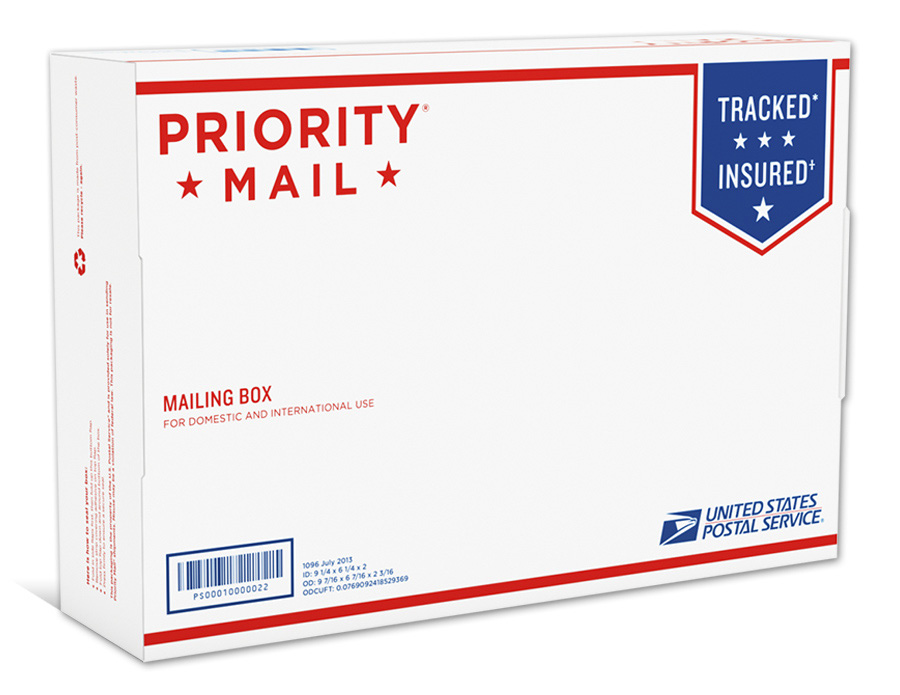
New USPS Flat Rate Prices for 2026 – Postage Changes for Flat Rate Loyalists

USPS flat rate shipping breaks from its usual price hike pattern in 2026. For the first time in years, some flat rate envelope prices will actually drop by up to $0.20, even as Priority Mail services overall increase by approximately 6.6%. The changes take effect January 18, 2026, creating a mix of price adjustments that makes some popular shipping options more affordable.

The Postal Service approved specific decreases alongside broader increases. Flat Rate Envelopes will drop by $0.20, while Padded and Legal Flat Rate Envelopes will decrease by $0.10 each. Most weight-based Priority Mail rates will increase by up to 13%. Priority Mail Express prices will rise by an average of 5.1%, and Ground Advantage services will see a 7.8% increase. First-Class Mail stamp prices remain unchanged for this price update. The Postal Service frames these targeted changes as part of its ongoing plan to restore long-term financial sustainability.

For anyone who hasn’t revisited the basics in a while: flat rate means you pay one price regardless of weight (up to 70 lbs) or distance. A Small Flat Rate Box shipped from Miami to Anchorage costs the same as one sent across town. That simplicity is the whole selling point. No scale, no zone chart, no surprises. You grab the free packaging from USPS, stuff it full, and the price is the price. USPS Flat Rate pricing is tied to the packaging type (Envelope vs. Box, Small vs. Medium vs. Large). That means the fastest way to overspend is picking a bigger Flat Rate container than you need, or using Flat Rate when a lightweight shipment would be cheaper by weight (especially nearby).

USPS announces 2026 flat rate price changes

The Postal Service officially filed for new shipping rates starting January 18, 2026. The USPS Board of Governors approved these adjustments to maintain competitiveness.

Flat rate customers face mostly increases across popular shipping options. The Flat Rate Envelope jumps to $11.95 from $11.00, while the Small Flat Rate Box rises to $12.65 from $11.70. The Medium Flat Rate Box increases to $22.95 from $21.05. Large Flat Rate Boxes will cost $31.50, up from $29.95. Military APO/FPO/DPO Large Flat Rate Boxes see a smaller increase to $30.15.

Commercial customers continue receiving discounted rates compared to retail prices. A Flat Rate Envelope costs $10.30 for businesses versus the $11.95 retail rate.

These adjustments align with broader shipping rate increases across USPS services. Priority Mail averages a 6.6% increase, Priority Mail Express rises 5.1%, and USPS Ground Advantage climbs 7.8%. Parcel Select prices rise approximately 6.0%.

First-Class Mail stamps remain unaffected with no price increase.

USPS adjusts flat rate box and envelope prices

Flat rate shipping packages face varied price adjustments starting January 18, 2026. These changes affect how frequent flat rate users plan their shipping costs across different package types.

Priority Flat Rate Envelopes Increase by $1

Before the new pricing, a quick refresher on what fits where: the standard Flat Rate Envelope measures 12½” x 9½” and works for thin items like documents, contracts, photos, and soft goods like t-shirts. The Legal Flat Rate Envelope runs 15″ x 9½”, giving you extra room for legal-size documents and oversized paperwork. The Padded Flat Rate Envelope (12½” x 9½”) adds built-in cushioning for small electronics, jewelry, or anything that needs a little protection in transit. The Window Flat Rate Envelope continues serving pre-addressed mailings. All four must close and seal completely… no bulging, no tape-assisted miracles. If it doesn’t close cleanly, you need a box.

Across the board, Flat Rate Envelope pricing increased by about $1 for all products. Flat Rate Envelopes now cost $11.95 at post offices, up from $11.00. Legal Flat Rate Envelopes increase to $12.25, and Padded Flat Rate Envelopes jump to $12.95. Commercial customers pay substantially less, with standard envelopes at $10.30, legal envelopes at $10.80, and padded options at $11.10.

Priority Mail Flat Rate Envelopes — 2025 vs. 2026 Retail Prices

Packaging Type2025 Price2026 PriceChange
Flat Rate Envelope$11.00$11.95+$0.95
Legal Flat Rate Envelope$11.20$12.25+$1.05
Padded Flat Rate Envelope$11.95$12.95+$1.00

Priority Flat Rate Boxes Increase by $1-2

Small Flat Rate Boxes now cost $12.65 at retail locations, up from $11.70. Medium Flat Rate Boxes see a larger jump to $22.95 (previously $21.05), regardless of whether customers choose the top-loading or side-loading version.

Large Flat Rate Boxes reach $31.50 (up from $29.95), though military APO/FPO/DPO shipments receive a discounted rate of $30.15. Business customers benefit from significant savings across all box sizes, with commercial prices set at $11.20 for small, $19.60 for medium, and $28.70 for large boxes.

Packaging Type2025 Price2026 PriceChange
Small Flat Rate Box$11.70$12.65+$0.95
Medium Flat Rate Box$21.05$22.95+$1.90
Large Flat Rate Box$29.95$31.50+$1.55
APO/FPO/DPO Large Flat Rate Box$28.70$30.15+$1.45

Here’s the size breakdown worth bookmarking: the Small Flat Rate Box (8⅝” x 5⅜” x 1⅝”) is ideal for small, dense items like phone accessories, cosmetics, or small tools/hardware. The Medium Flat Rate Box comes in two versions: a top-loading option (11¼” x 8¾” x 6″) and a side-loading version (14″ x 12″ x 3½”) that’s perfect for books, framed prints, subscription kits or flat merchandise. The Large Flat Rate Box (12¼” x 12¼” x 6″) are the “ship a lot, ship it once” workhorse when you’re packing multiple items securely.

All flat rate products maintain their key advantage, shipping packages up to 70 lbs anywhere in the US for one predictable price.

Priority Mail Express Decreases Overnight Pricing

Priority Mail Express flat rate services will see price decreases in 2026, a rare occurrence in postal pricing, but only if you have access to commercial rates. This marks a notable exception to the overall trend of postal rate hikes as the USPS fights off FedEx and UPS.

Priority Mail Express for ordinary people as a whole will see an average increase of 5.1% despite these commercial decreases. The 2026 retail price for a standard flat rate envelope will be $33.25, while commercial customers will pay just $28.80. The legal flat rate envelope will cost $33.50 retail but only $29.10 for commercial shippers. Given the significant savings, it’s worth noting: Any business using a USPS-compatible shipping platform (Stamps.com, ShipStation, or similar services) automatically qualifies for commercial rates. You don’t need a special contract or minimum volume. 

Packaging Type2025 Retail Price2026 Retail Price2026 Commercial PriceChange
Express Flat Rate Envelope$31.40$33.25$28.80+$1.85
Express Legal Flat Rate Envelope$31.65$33.50$29.10+$1.85
Express Padded Flat Rate Envelope$32.25$34.15$29.35+$1.90

These adjustments reflect USPS’s strategic pricing approach. Priority Mail Express remains the premier overnight service for businesses, delivering in 1-3 days with a money-back guarantee. For time-sensitive documents and packages weighing up to 70 pounds, these services offer predictable flat rate pricing regardless of destination within the US.

Looking ahead: Mixed price adjustments reflect USPS strategy

The 2026 flat rate changes mark a departure from the usual pattern of across-the-board increases. Flat rate envelope decreases provide genuine savings for frequent shippers, while box prices continue climbing. This mixed approach reflects the Postal Service’s effort to balance competitive positioning with financial necessity.

Commercial shippers benefit significantly from the pricing structure, paying substantially less than retail customers across all flat rate products. The core advantage of flat rate shipping remains intact—predictable pricing for packages up to 70 pounds regardless of destination.

Ultimately, the Postal Service is trying to balance market competition with operational sustainability. The selective price decreases on envelopes suggest strategic positioning, while box increases reflect continued cost pressures. Flat rate loyalists face a more complex pricing landscape but retain the predictable shipping costs that make these services attractive for businesses and individuals nationwide.

All of these pricing increases go into effect January 18, 2026.

Ultimate Stamp Price Guide 2019

“Be like a postage stamp. Stick to one thing until you get there.”

― Josh Billings, 19th-century American humorist

Effective 1/27/19, the United States Postal Service (USPS) has made changes to the price of a stamp. While some decreases can be found, the big change came in the largest-ever stamp price increase in history. And some prices have seen no changes at all. Read on for a complete guide to the price of a stamp and other postage increases 2019!

USPS Postage Price Changes – At a Glance

  • Mailing Services Products – approximate increase of 2.5%
  • Priority Mail Express –  approximate increase of 3.9%
  • Priority Mail increased approximate increase of 5.9%

Stamp Prices Are Low – An Overview

The USPS reportedly has some of the lowest postage rates in the world and offers competitive rates for shipping. The USPS, unlike other carriers, does not add extra fees for things like fuel, residential delivery, weekend delivery, or holiday season delivery. In addition, seeing zero tax dollars for operations, it subsists solely on sales of postage, products, and services to support its entirety. Before we get into the new prices, to whet your appetite, here are a few other USPS facts:

  • 493.4 million mail pieces are processed each day
  • That is 20.6 million each hour
  • Per minute, 342,638 are processed
  • And 5,711 mail pieces are processed every second

So, when you send your grandmother a letter letting her know you’re doing just fine, and yes you did get that $5 she mailed last week (thanks, Oma!), that’s factored into these statistics. When you sell your DVD boxset of The Nanny on Ebay because you have a digital copy now, and you ship that on to Utah, that’s another tick on the ol’ USPS fact sheet. When your hand has uncramped enough to finally get around to physically mailing out those thank you notes from your graduation party six months ago, those too are included in the 493.4 million mail pieces process each day!

Price Increases for First Class Mail

Here’s a recap of what First Class Mail gets you, at just the price of a stamp:

  • Best priced service for mail up to 13 oz
  • Delivery in 1 to 3 business days
  • Insurance for loss or damage up to $5,000 for merchandise only
  • Can combine with extra services to confirm delivery
  • Up to 3.5 ounces free with commercial priced letters and cards

Changes to Price of a Stamp for Letters and Postcards

With the 2.5 percent price increase for Mailing Services products, the most notable of the new rates is a five-cent increase to the price of a First-Class Mail stamp, from 50 cents to 55 cents. The 10 percent hike is the largest price increase in the history of the USPS. The second largest price hike was in 1991, when the price of a stamp increased from 25 cents to 29 cents.

Even though the basic 1-ounce price of a stamp went up, another part actually went down. The “additional ounce” price for letters will see a decrease of six cents, from 21 cents to 15 cents. Additional ounces cover anything that weighs more than 1-ounce which is typically a larger document or invitation. This means the 150 wedding invitations (typically a 2-ounce stamped letter) you need to send out may only cost 70 cents a piece, rather than 71 cents. And who doesn’t want to save $1.50?

Complete Pricing Breakdown

  • Letters (1 oz.) $0.55
  • Letters – Additional Ounces: $0.15
  • Non-Machinable Surcharge: $0.15 (see below!)
  • Letters (metered 1 oz.): $0.50 (metered mail is when a postage meter stamps directly onto the letter)
  • Outbound (Outgoing) International Letters (1 oz.): $1.15
  • Domestic Postcards: $0.35

Please note the base price of $0.55 is for a standard-sized, rectangular envelope. If your envelope is square, oversized, or unusually shaped, costs for stamps begin at $0.70. This factors in your non-machinable surcharge (see below).

In the same vein, stamps for standard-sized, rectangular postcards start at $0.35. Any oversized postcards require letter stamps, which as we’ve now learned, start at $0.55.

Complete Sizing Guide

Letters qualify under the following dimensions:

  • Length – minimum 5”, maximum 11 ½”
  • Height – minimum 3 ½”, maximum 6 ⅛”
  • Thickness – minimum .007”, maximum ¼”

Cards qualify under the following dimensions:

  • Length – minimum 5”, maximum 6”
  • Height – minimum 3 ½”, maximum 4 ¼”
  • Thickness – minimum .007”, maximum 0.016”

What is a “Non-Machinable” Surcharge?

If you have unusually shaped mail pieces – like uneven, stiff, square, or vertical envelopes – and the machine is unable to sort them into the correct pile, or if your mail has extras – like buttons, clasps, or string – it must be hand-cancelled (processed by a human being). These mail items are considered “non-machinable,” and a fee of $0.15 may be applied, even if they weigh less than the standard letter 1 oz.

What About Forever Stamps?

If you’re wondering about First-Class Mail Forever stamps – introduced in 2007 and designated for 1 oz letters that don’t expire even if stamp prices increase – they will still be available for purchase, but at the increased rate of $0.55. Forever stamps purchased before the increase on 1/27/19 will, of course, be honored.

Changes to Priority Mail Prices

First, here’s a quick recap of what the USPS Priority Mail service includes:

  • Delivery in 1 to 3 business days
  • Delivery available seven days a week in most locations
  • Prices starting at $7.35
  • Can combine with extra services to confirm delivery

Domestic Priority Mail Retail Flat Rate (Boxes and Envelopes)

In an attempt to simplify things, the USPS introduced the first flat rate envelope in 1991 and the first flat rate box in 2004. As their name indicates, there is a flat rate – a one-time fee – and no further weighing or calculating is needed. If they fit in the box, the price is locked and predictable. These ship in 1-3 business days.

Box TypeDimensionsPrice
Small Flat Rate Box8 11⁄16″ x 5 7⁄16″ x 1 3⁄4″$7.90
Medium Flat Rate Box (top loading)11 1⁄4″ x 8 3⁄4″ x 6$14.36
Medium Flat Rate Box (side loading)14″ x 12″ x 3 1⁄2″$14.36
Large Flat Rate Box12 1⁄4″ x 12 1⁄4″ x 6″$19.95
APO/FPO Large Flat Rate Box*12 1⁄4″ x 12 1⁄4″ x 6″$18.45
Regular Flat Rate Envelope12 1⁄2″ x 9 1⁄2″$7.35
Legal Flat Rate Envelope9 1⁄2″ x 15″$7.65
Padded Flat Rate Envelope12 1⁄2″ x 9 1⁄2″$8.00

*The USPS offers a discount of $1.50 per Priority Mail Flat Rate Box to those who want to send loved ones serving in the military a special delivery. Just look for the abbreviation APO – which stands for Air or Army Post Office – or FPO – which stands for Fleet Post Office (Navy).

A Note On First-Class Package Service and Zone-Based Pricing

First-Class Package Service, the light, fast service primarily used by businesses for fulfillment purposes will move to zone-based pricing. These zones are predetermined and factor the distance from where shipping begins to the package’s destination. According to USPS, this is to better align with the cost of service and is intended to improve value based on distance.

Concluding Thoughts on Stamp Price Increase

According to the New York Times, within the last ten years, the number of first-class mail pieces sent through the United States Postal Service has fallen by more than 50 percent. If you don’t include invitations and holiday cards, the average American household receives only 10 pieces of personal mail each year. Although the statistics presented earlier certainly seem staggering (5,711 mail pieces are processed every second?!), the fact of the matter is Americans just aren’t communicating the way they used to. And yet, a postal worker visits every mailbox several days a week, regardless of the volume.

One needs only to briefly visit the USPS website before discovering that, though the information is certainly helpful, it isn’t the most navigable or consumer-friendly. Perhaps if data was arranged in a one-stop, confusion-free way, folks would be able to move past the terms “non-machineable” and “automation,” and quickly reference whether or not their letter or package fits in a particular category, and how much that category costs. Yeah, someone should probably make that quick-reference…

So, here it is! Our Ultimate Guide to the 2019 Price of a Stamp.
New Postage Rates for 2014 — Stamp Price & Priority Mail Express Going Up

The price of a stamp went up by 7% this Sunday, January 26th from 46 cents to 49 cents. Compared to typical standards enforced by the Postal Regulatory Commission, this is an enormous increase — all in the name of helping the USPS stay afloat as they face competition and economic challenges. And while the stamp price will have the most direct impact on consumers and businesses it isn’t the only the rate the Postal Service earmarked to hike this year. Surprisingly, some rates even went down.

Changes to Common Postage For Consumers: Forever Stamps, Postcards & Additional Ounces

While the price of a stamp for a 1-ounce letter went up by 3 cents, the changes are less observable in case of additional ounces and postcards, because the 2014 rates for each went up by only 1 cent. The change is 21 cents from 20 cents in case of additional ounces and 34 cents from 33 cents for postcards. This is not too much for a single mail piece, but multiplying the actual rate per additional ounces by ten (or any other value) will result in 10 cents (or more) paid in addition in 2014 by all consumers using USPS services. T

New Metered Mail Discount — One Way to Save

This year introduces a new loophole for the ordinary price of a stamp: by metering mail at home, a 1-ounce letter can be sent for 48 cents. This is a 1-cent saving now that the price has gone up.

Priority Mail — Nearly Unchanged; Deeper Discounts Online

Priority Mail's fancy new packaging -- without a price change

The 2014 Priority Mail rates will remain largely the same since the product was recently re-vamped in 2013 to include tracking, insurance and predictable delivery dates. Except from the Priority Mail Large Flat Rate Box and APO/FPO/DPO Large Flat Rate Boxes, which both increase by 0.60 cents, and 3-pound Priority Mail, which goes down in price by about 10 cents, all the other rates for 2014 Priority Mail Flat Rate stay the same and see no increase nor decrease compared to the last year.
Deeper discounts will come with printing postage online in 2014. Savings came to a maximum of 20% for folks printing Priority Mail postage from home and in 2014, savings will increase to up to 35%.

Many Changes to Priority Mail Express and Flat Rate Services

The Priority Mail Express rates are facing an average increase of three percent in 2014. These changes are spread across weight ranges and mailing distance, or “zones.” Even though the rates for 0.5 pounds stay the same, they are going up by 59 cents, 98 cents and 66 cents for one, two and three-pounds packages respectively for Zone 3 packages. The rates go up by 1.79 dollars for Zone 4 mailing, 1.98 dollars for Zone 5, 2.32 dollars for Zone 6, 2.15 dollars for Zone 7 and again 2.32 dollars for Zone 8 – all prices are applicable only for one-pound packages. The increases might not correspond very much –- for instance, the rate for 2-lbs packages in zone six is higher (1.49 dollars) compared to the rate for 3-lbs packages in the same zone (1.29 dollars) — so it may be worth looking over the USPS’s full breakdown.

Among Flat Rate Express services, the Flat Rate Boxes rate is the only one that suffered a change in 2014 compared to the previous year, going up by 5.00 dollars (from 39.95 dollars to 44.95 dollars). The other rates, Flat Rate Envelope, Legal Flat Rate Envelope and Padded Flat Rate Envelope, remain at 18.11 dollars in 2014, which is the same rate as in 2013.

USPS Improves Priority Mail Without Price Increase

The USPS has improved its Priority Mail service without even raising the price of a stamp. If you use the post office frequently, you hardly expect improvements without a postage rate increase. There’s now faster, better Priority Mail service without a single penny added to the postage price.

What’s New with Priority Mail

There are many new features and benefits for Priority Mail including: new packaging, better tracking and free insurance. Also new to Priority Mail  is faster service — packages may arrive a day earlier. Before, Priority Mail could take two to three days. Now depending on from where and to where you are mailing, your Priority Mail could arrive overnight. In many cases Priority Mail service will now compete with the big overnight delivery companies like FedEx an UPS. And — you won’t be shocked by how much it costs!

Real Overnight Service without Price Hike

There is no postage rate increase for Priority Mail Service (yet!) even though packages could arrive as soon as overnight. While packages may arrive early, you won’t have a deliberate choice between overnight, two-day, or three-day delivery. This is always determined by the market you live in and you’ll get an estimate of the service speed when you purchase it. So if you are in a big city, chances are that you will get all the perks you are looking for with none of the punch to your pocketbook. The postage price for Priority Mail will remain flat, even though packages are expected to reach their destination sooner.

USPS Packaging, Tracking and Insurance Improved

The stylish new priority mail boxes.

The stylish new priority mail boxes.

The packaging at the Post Office has gotten an update, the tracking is better and there is now automatic insurance for all Priority Mail. For now, you can still use your old Priority Mail boxes but the new, stylish ones are already on the shelf at your local post office branch. In general, the tracking services for Priority Mail has also improved. New barcodes on the labels make finding your package easier and you will learn your expected delivery date as soon as you place your order. The free insurance depends on which payment method you use. You can get up to $50 of insurance for shipments sent at the Post Office or sent using Commercial Base Pricing. Businesses can get up to one hundred dollars worth of free insurance for shipments sent using Commercial Plus Pricing. (Commercial Base and Commercial Plus services depend on mailing volume.) You can always buy more insurance but this new feature will surely give you peace of mind.

Express Mail Changed to “Priority Mail Express”

The USPS has also rebranded Domestic Express Mail as Priority Mail Express. It’s still the same service but there is new packaging for this service as well. The USPS did a good deal of market research and found that the old packaging and service details were often confusing for customers. All of these changes were made in order to streamline the options for post office customers.With so many shipping services that compete with the USPS, making these changes seems like a smart move.

To stay competitive, it will be important for the USPS to continue to listen to its customers and to create valuable services in the future. Don’t be surprised if the prices go up, though. It is well known that the USPS is struggling and it will be a big win for their growth if people are satisfied with the changes. The best advice is to check out the new Priority Mail while the old pricing is still in effect.

First-Class Postage — What Exactly is First-Class Mail?

First-class postage is a type of mail which indicates the level of service a package or letter is supposed to receive from a postal service. Most folks in the US think that all mail is sent first-class and that the label is a kind of misnomer. That’s because most consumer-facing mail is sent this way. (In the UK, there’s an actual distinction between classes of postage for consumers, so it’s different.) You’re about to find out what first-class mail really is.

First-Class Postage and Other Classes of Mail

First-class mail gets higher priority in terms of delivery time over other classes of mail. While the USPS doesn’t explicitly break other types of mail into classes, there’s a rough hierarchy which can be broken down in to four main classes of mail:

  • First-class mail — Letters, postcards or packages up to 13 ounces qualify as first-class mail. Put a postage stamp on a standard letter and you can send it anywhere in the United States for the price of a stamp.
  • Second-class mail — Officially known as the “Periodical” class of mail. The USPS reserves second-class mail for newspapers magazines and any other periodical that is published more than four times a year at regular times. Special categories of periodical mail (eduction, nonprofits) get lower postage prices.
  • Third-class mail — The USPS calls third-class mail “Standard Mail.” Its bulk pricing is designed for catalogs, newsletters, flyers and advertising.
  • Fourth-class mail — Also known as “Media Mail,” fourth-class mail is an inexpensive way to ship educational materials. Books, film, audio recordings and even loose notes are eligible but delivery times can span up to 8 days because of the low priority.

It’s obvious, but most consumers wouldn’t encounter anything but first-class postage since the other classes of mail are primarily for businesses or special needs.

First Class Postage Rates

Pricing for first-class mail varies quite a bit but you can calculate all sorts of mail prices with this handy postage calculator. Basically, the price of a stamp is standard (keep track of that here on the homepage!) and that covers most first-class mail — all letters under one ounce in weight. The only exception is a postcard which you can mail for 32 cents. Other letters range in price based on weight up to about $1.

Flats and boxes range in postage price from about $1 to up to about $4, depending on how many ounces the item weighs, as long as it’s less than 13 ounces overall. This is why it’s best to just use a calculator.

How Long Does It Take?

According to the USPS, first-class mail takes two to three days to arrive with its recipient. Unfortunately, there’s no guarantee around this — so you won’t get your money back if it doesn’t get there in time. But some first-class mail arrives in only one day.

The postal service only factors their transportation into their estimate so other variables like when your mail gets picked up aren’t a part of the equation. To eliminate that issue, it’s best to drop mail directly at the post office. Official mail boxes or your own mailbox can have sporadic pick-up times so it’s harder to get a reliable timeframe using those methods of drop-off.

Another variable that can impact first-class postage delivery times are days that the postal service doesn’t operate. Sundays aren’t a working day for the post office. The USPS also observes the long list of federal holidays, which can add to delivery time. Exceptions like severe weather and high-volume seasons like Christmas can also cause delays.

In the UK, first-class mail is an actual delivery time upgrade over second-class and it’s priced likewise. The Royal Mail delivers mail with first-class postage the day after it’s sent — though, like in the US, this isn’t guaranteed.

Overall, you can get a lot more detailed information about prices, regulations and dimensions on first-class mail from the USPS here and here.